


Henri Chopin
J'ose!, 1992
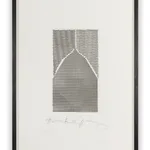
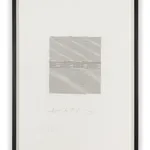
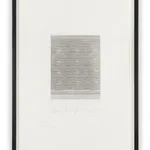
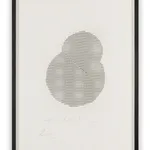
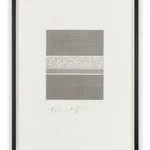
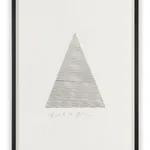
13 ofortų ant rankų darbo „Sicas Graphia“ popieriaus, knyga ir katalogas; šilkografija ant audiniu dengto portfelio dėklo ir popieriaus / 13 etchings on handmade “Sicas Graphia” paper, book and catalogue; silkscreen on clothbound portfolio case and paper.
Works: 50 × 35 cm
Case: 51.5 × 37.5 × 4.2 cm
Frame: 56 x 41 cm
Case: 51.5 × 37.5 × 4.2 cm
Frame: 56 x 41 cm
Edition of 30
Further images
-
(View a larger image of thumbnail 1
)

-
(View a larger image of thumbnail 2
)

-
(View a larger image of thumbnail 3
)

-
(View a larger image of thumbnail 4
)

-
(View a larger image of thumbnail 5
)
-
(View a larger image of thumbnail 6
)
-
(View a larger image of thumbnail 7
)
-
(View a larger image of thumbnail 8
)

-
(View a larger image of thumbnail 9
)

-
(View a larger image of thumbnail 10
)

-
(View a larger image of thumbnail 11
)
-
(View a larger image of thumbnail 12
)

-
(View a larger image of thumbnail 13
)
-
(View a larger image of thumbnail 14
)
-
(View a larger image of thumbnail 15
)

Šilkografija dekoruotas audiniu dengtas portfelio tipo dėklas, kuriame yra kolofonas, knygelė su šilkografuotu Chopin tekstu ir trylika ofortų ant rankų darbo „Sicas Graphia“ rūgščių neturinčio popieriaus. Kiekvienas atspaudas įdėtas į...
Šilkografija dekoruotas audiniu dengtas portfelio tipo dėklas, kuriame yra kolofonas, knygelė su šilkografuotu Chopin tekstu ir trylika ofortų ant rankų darbo „Sicas Graphia“ rūgščių neturinčio popieriaus. Kiekvienas atspaudas įdėtas į dvigubai sulankstytus lapus, sudėtus virš vidinio rėmelio, kuriame saugomas katalogas apie dactylo-poèmes ir patį menininką, su Chopin, Paul Zumthor, Nicholas Zurbrugg ir Françoise Woimant tekstais prancūzų ir anglų kalbomis.
Silkscreened clothbound portfolio case containing a colophon, a booklet with a silkscreened text by Chopin, and thirteen etchings on handmade "Sicas Graphia" acid-free paper individually held in double-folded pages nested above an interior frame encasing a catalogue on the dactylo-poéms and the artist, with texts in French and English by Chopin, Paul Zumthor, Nicholas Zurbrugg, and Françoise Woimant.
Henri Chopin was a French poet, typographer, musician, independent publisher, and a pioneer of sound and concrete poetry. A vanguardist artist, he is most known for liberating sound and language from typographical conventions, notably through his dactylpoème (typewriter poems) and audio-poémes. Born into a family of artists, Chopin received a liberal education until the height of World War II, when he was deported to a labor camp in Königsberg, East Prussia. He fled the Soviet Union to France in 1945, eventually enrolling in the army from 1948 to 1950, which took him to Austria and Indochina. Back in Paris, Chopin approached avant-garde poetics and the “oral” experimental poetry from Czechoslovakia, Russia, Poland, and the Baltics. A significant influence and collaborator, Jean Ratcliffe, whom he married in 1952, introduced him to Bernard Heidsieck, Ladislav Novak, and Raoul Hausmann, among others. Between 1958 and 1974, Chopin edited and designed an international journal of experimental concrete and sound poetry, originally called Cinquième Saison, but now known as OU. Chopin’s performances and recordings emphasize the organicity of the human anatomy and its reverberating effects on the outside. From nasal vibrations to guttural cries or infamously swallowing a probe for La Digestion (1974), his explorations of human noise obliterate the tone between inside and outside, chaos and harmony further manipulated and pioneered through studio and tape recorder experiments. An “éminence grise,” as Francesco Conz described him, Chopin’s poetry found a home in Conz’s support and enthusiasm for multiples. Chopin’s notable publications include Le dernier roman du monde (1961), Le homard cosmographique (1965), Poésie Sonore Internationale (1979), Les Riches Heures de l‘Alphabet (1992) and Graphpoemesmachine (2006) published by Archivio Conz. Throughout his career, he exhibited and performed internationally at the Whitechapel Gallery, London (1974), the Centre Pompidou, Paris (1983), the ICA, London (2009), The Museum of Modern Art, New York (2012), the Kunsthalle Düsseldorf (2013), and the Centre d’Art Contemporain, Geneva (2017).
Silkscreened clothbound portfolio case containing a colophon, a booklet with a silkscreened text by Chopin, and thirteen etchings on handmade "Sicas Graphia" acid-free paper individually held in double-folded pages nested above an interior frame encasing a catalogue on the dactylo-poéms and the artist, with texts in French and English by Chopin, Paul Zumthor, Nicholas Zurbrugg, and Françoise Woimant.
Henri Chopin was a French poet, typographer, musician, independent publisher, and a pioneer of sound and concrete poetry. A vanguardist artist, he is most known for liberating sound and language from typographical conventions, notably through his dactylpoème (typewriter poems) and audio-poémes. Born into a family of artists, Chopin received a liberal education until the height of World War II, when he was deported to a labor camp in Königsberg, East Prussia. He fled the Soviet Union to France in 1945, eventually enrolling in the army from 1948 to 1950, which took him to Austria and Indochina. Back in Paris, Chopin approached avant-garde poetics and the “oral” experimental poetry from Czechoslovakia, Russia, Poland, and the Baltics. A significant influence and collaborator, Jean Ratcliffe, whom he married in 1952, introduced him to Bernard Heidsieck, Ladislav Novak, and Raoul Hausmann, among others. Between 1958 and 1974, Chopin edited and designed an international journal of experimental concrete and sound poetry, originally called Cinquième Saison, but now known as OU. Chopin’s performances and recordings emphasize the organicity of the human anatomy and its reverberating effects on the outside. From nasal vibrations to guttural cries or infamously swallowing a probe for La Digestion (1974), his explorations of human noise obliterate the tone between inside and outside, chaos and harmony further manipulated and pioneered through studio and tape recorder experiments. An “éminence grise,” as Francesco Conz described him, Chopin’s poetry found a home in Conz’s support and enthusiasm for multiples. Chopin’s notable publications include Le dernier roman du monde (1961), Le homard cosmographique (1965), Poésie Sonore Internationale (1979), Les Riches Heures de l‘Alphabet (1992) and Graphpoemesmachine (2006) published by Archivio Conz. Throughout his career, he exhibited and performed internationally at the Whitechapel Gallery, London (1974), the Centre Pompidou, Paris (1983), the ICA, London (2009), The Museum of Modern Art, New York (2012), the Kunsthalle Düsseldorf (2013), and the Centre d’Art Contemporain, Geneva (2017).


